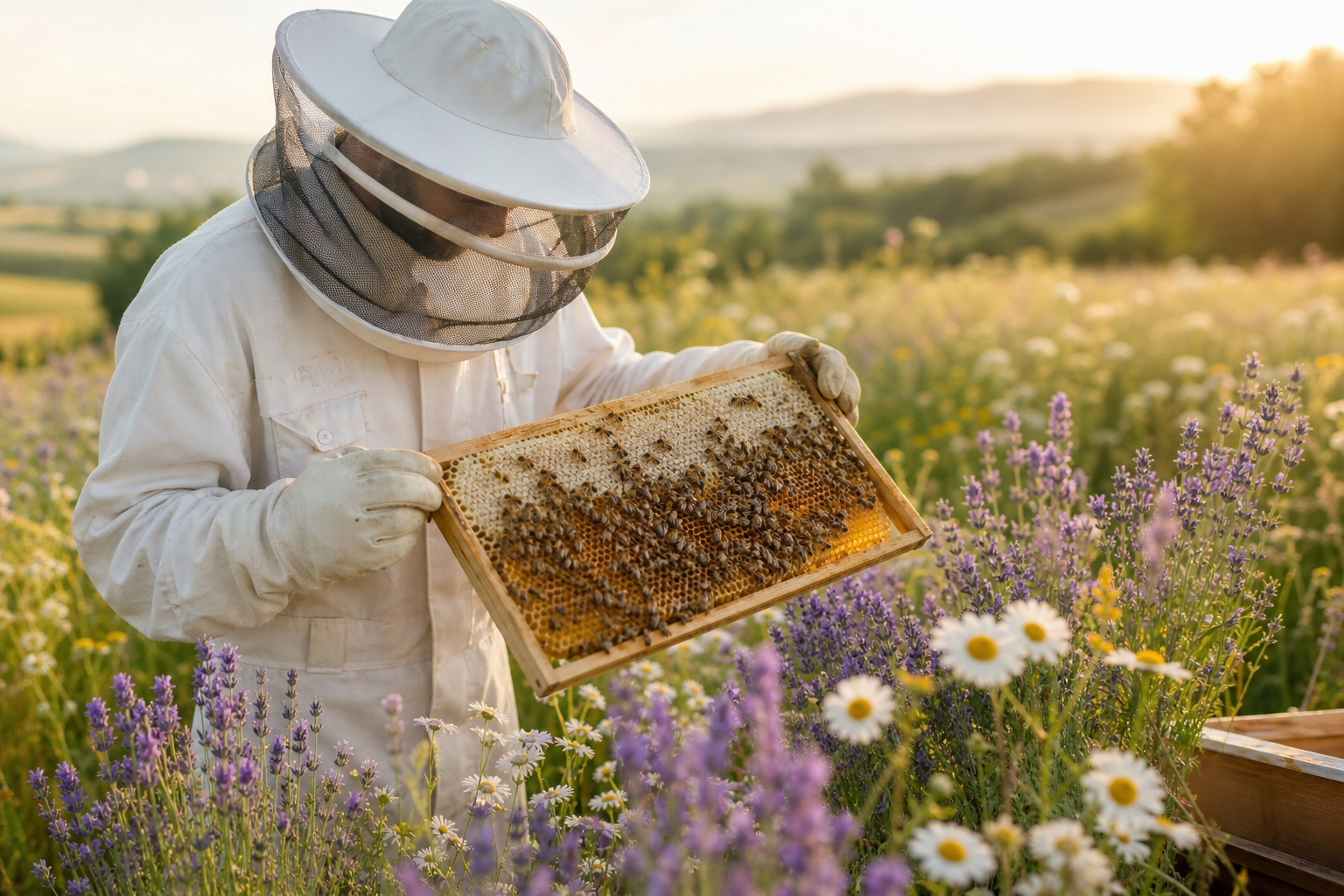
When you drizzle honey into your tea or spread it on toast, you are tasting the work of thousands of bees — each one visiting tens of thousands of flowers to produce a single jar. But not all honey is created equal, and the difference starts long before the jar reaches your kitchen. It starts with how the bees are kept and how the land around them is managed.
What Makes Beekeeping "Organic"?
Organic beekeeping is not simply about avoiding chemicals. It is a holistic approach that considers the health of the bees, the purity of the forage, and the sustainability of the entire ecosystem. Certified organic apiaries must meet strict standards: hives must be placed in areas where the surrounding flora is free from synthetic pesticides, herbicides, and GMOs within a radius of several kilometers. The bees themselves cannot be treated with routine synthetic antibiotics or miticides — instead, beekeepers rely on natural management practices, strong genetics, and careful hive hygiene to keep colonies healthy.
The Radius Rule: Why Location Is Everything
A single bee can forage up to 5 kilometers from its hive. This means that for honey to be truly organic, the land within that radius must be free from agricultural chemicals — a requirement that is surprisingly difficult to meet in regions dominated by conventional farming. Organic beekeepers work closely with surrounding landowners or choose remote, protected areas where wildflowers and natural vegetation dominate. This "clean forage zone" is the single most important factor separating organic honey from conventional alternatives, and it is something no amount of processing can compensate for after harvest.
No Routine Antibiotics: How Organic Beekeepers Keep Bees Healthy
In conventional beekeeping, antibiotics are sometimes used prophylactically to prevent common bacterial diseases like American foulbrood. Organic standards prohibit this practice entirely. Instead, organic beekeepers focus on prevention: selecting disease-resistant bee strains, maintaining strong colonies that can fend off pests naturally, rotating combs to reduce pathogen buildup, and using organic acids like formic or oxalic acid — which are naturally occurring — only when absolutely necessary. The result is honey that is free from antibiotic residues and bees that are stronger for having faced challenges naturally.
The Ripple Effect: Organic Apiaries Help the Wider Environment
Organic beekeeping benefits more than just the hive. By maintaining chemical-free foraging zones, organic apiaries create safe havens for wild pollinators — native bees, butterflies, hoverflies, and moths — whose populations have declined dramatically in areas of intensive agriculture. Every organic apiary acts as a small sanctuary. The plants pollinated by these bees go on to produce seeds, fruits, and habitat for other wildlife. When you choose organic honey, you are supporting a system that actively regenerates the landscape rather than depleting it.
How Processing Affects What Ends Up in the Jar
The care taken at the apiary can be undone in the processing facility. Conventional honey is often heated to high temperatures to delay crystallization and filtered under pressure to remove pollen — a process that strips away much of what makes raw honey special. Organic standards require minimal processing: gentle warming if any, and simple straining that removes visible impurities while leaving the natural pollen, enzymes, and antioxidant compounds intact. This is why organic raw honey retains its complex floral character — it has not been stripped of the very things that make it honey.
How to Recognize Organic Honey Worth Trusting
- Look for a clear "organic" certification logo from a recognized body — not just the word on the label.
- Check the ingredient list: it should say "100% honey" and nothing else.
- Raw organic honey crystallizes naturally over time — this is a sign of purity, not spoilage.
- Research the producer: do they tell you where the bees forage? Do they describe their handling process?
- Choose honey packaged in glass — it protects the honey without the risk of chemical leaching that can occur with some plastics.
A Choice That Reaches Further Than Your Kitchen
Every jar of organic honey represents a series of deliberate choices: a beekeeper who chose to work with nature rather than against it, land that was kept free from synthetic chemicals, bees that were allowed to thrive on their own terms, and honey that was handled gently from hive to jar. When you select Nutri Afiat Organic Honey, you are choosing 100% pure honey sourced from selected natural nectar — produced with respect for the bees, the land, and the people who enjoy it. It is a small daily choice that ripples outward in ways both seen and unseen.
The health of the bee and the health of the honey are one and the same — you cannot have one without the other.
The next time you reach for a jar of honey, take a moment to consider the journey behind it. Does the beekeeper know the land the bees forage on? Are the hives treated with care, not chemicals? Is the honey handled with the gentleness it deserves? These questions matter — because the answers are what separate a truly nourishing honey from a commodity. Experience the difference with Nutri Afiat Organic Honey — traceable from selected natural nectar to your table, as nature intended.
Taste the purity yourself
Start your daily wellness ritual with Nutri Afiat Organic Honey.
Keep reading
 Resep
Resep
Honey Glazes and Marinades: 4 Easy Recipes to Elevate Your Savory Cooking
Honey is not just for baking and tea. Discover four simple honey glazes and marinades that bring glossy, caramelized flavor to chicken, salmon, and roasted vegetables.
Read article → Kesehatan
Honey for Wound Healing: The Science Behind Nature's Oldest Medicine
Long before modern antiseptics, honey was used to dress wounds and burns. Discover the science behind honey's antibacterial, moisture-locking healing powers — and how to use it safely at home.
Read article → Imunitas
Honey and Gut Health: Strengthen Your Immunity from the Inside Out
Roughly 70 percent of your immune system lives in your gut. Discover how pure honey acts as a natural prebiotic to nourish beneficial bacteria and strengthen immunity from the inside out.
Read article →